
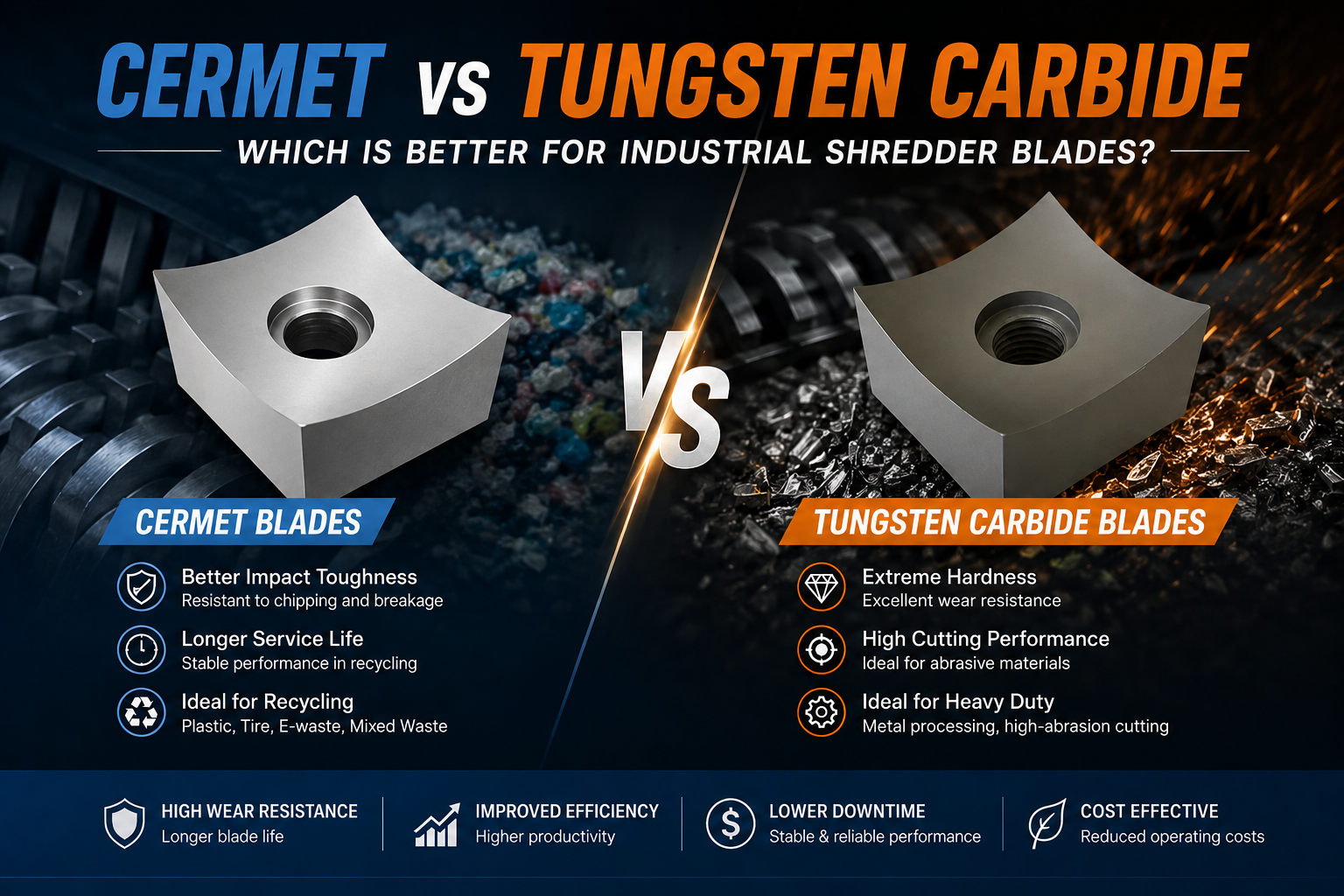
In modern recycling and waste processing industries, choosing the right cutting material is critical for improving efficiency, reducing downtime, and lowering operating costs. Among the most commonly used materials for industrial shredder blades are cermet (metal ceramic) and tungsten carbide (WC-Co).
Both materials are widely used in recycling blades, shredder knives, and wear-resistant cutting tools, but they perform differently depending on the application.
So, what is the difference between cermet blades and tungsten carbide blades, and which one is better for your shredding system?
What Is a Cermet Blade?
A cermet shredder blade is made from a composite material that combines ceramic hardness with metal toughness. The term “cermet” comes from CERamic + METal.
Typical compositions include:
Ceramic phase: TiC, TiCN (provides hardness and wear resistance)
Metal binder: Nickel, cobalt, molybdenum (provides toughness and impact resistance)
This combination makes metal ceramic blades highly resistant to wear while maintaining good mechanical strength, especially in plastic recycling, rubber shredding, and industrial waste processing.
What Is a Tungsten Carbide Blade?
A tungsten carbide shredder blade (WC-Co) is made by combining tungsten carbide particles with a cobalt binder. It is known for:
Extremely high hardness
Excellent wear resistance
Strong cutting ability in abrasive materials
Because of these properties, carbide shredder knives are widely used in industrial cutting, metal processing, and high-abrasion recycling environments.
Cermet vs Tungsten Carbide: Key Differences
1. Wear Resistance
Tungsten carbide blades offer excellent hardness and perform very well in abrasive cutting conditions.
Cermet blades also provide strong wear resistance, especially in continuous recycling applications.
👉 In many plastic recycling blade and industrial waste shredding applications, both materials perform well, but carbide often has a slight edge in extreme hardness environments.
2. Impact Toughness
Cermet shredder blades generally provide better resistance to edge chipping and impact stress.
Tungsten carbide blades are harder but more brittle under heavy impact.
👉 For tire recycling, e-waste shredding, and mixed materials, cermet often performs more stably.
3. Service Life
Cermet blades often deliver longer service life in moderate-to-high wear recycling environments.
Carbide blades excel in extremely abrasive but stable cutting conditions.
👉 In real-world applications, performance depends heavily on material type and operating conditions.
4. Application Suitability
Cermet Shredder Blades are ideal for:
Plastic recycling
Tire recycling
E-waste processing
Mixed industrial waste
Tungsten Carbide Blades are ideal for:
High-abrasion cutting
Metal processing
Precision industrial cutting
Heavy-duty shredding systems
Performance Comparison Summary
Feature | Cermet Blades | Tungsten Carbide Blades |
|---|---|---|
Wear Resistance | High | Very High |
Impact Toughness | Better | Lower |
Edge Chipping Resistance | Excellent | Moderate |
Hardness | High | Very High |
Service Life | Long (in recycling use) | Very long (in stable cutting) |
Which One Should You Choose?
The choice between cermet shredder blades and tungsten carbide shredder blades depends on your application:
If your operation involves impact-heavy materials (like tires, mixed waste, e-waste), cermet is often the better choice.
If your application requires extreme hardness and stable cutting conditions, tungsten carbide may perform better.
In many modern recycling systems, manufacturers are increasingly choosing cermet blades due to their balanced performance and lower maintenance requirements.
Conclusion
Both cermet shredder knives and tungsten carbide blades are high-performance materials used in industrial shredding applications. However, they serve slightly different purposes.
Cermet blades: Better balance of wear resistance and toughness
Carbide blades: Maximum hardness for extreme cutting conditions
For most plastic recycling, tire recycling, and industrial waste processing applications, cermet technology is becoming a strong alternative due to its improved stability and longer service life.
Choosing the right industrial shredder blade can significantly improve productivity, reduce downtime, and lower overall operating costs.