
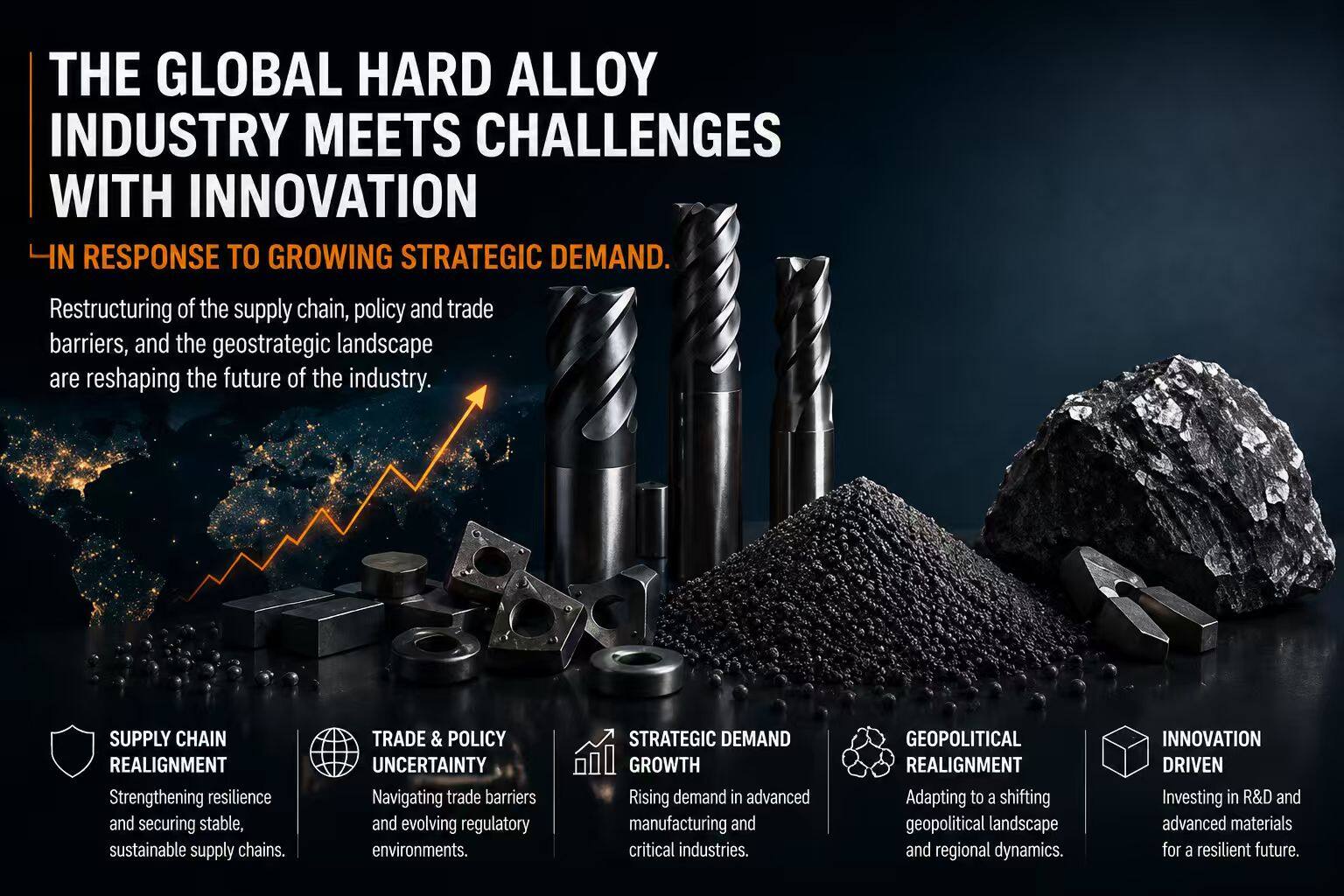
The global tungsten carbide industry is entering a new phase of transformation driven by rising demand from aerospace, defense, mining, precision machining, and advanced manufacturing sectors. As a core material in modern industrial production, tungsten carbide continues to play a critical role in cutting tools, wear-resistant parts, and high-performance engineering applications.
At the same time, the market is facing increasing pressure from raw material shortages, rising tungsten prices, and geopolitical supply chain risks. These factors are reshaping the global hardmetal industry and forcing manufacturers to rethink sourcing, production, and recycling strategies.
What Is Tungsten Carbide and Why Is It Important?
Tungsten carbide is a compound made primarily from tungsten and carbon. It is widely recognized for its extreme hardness, wear resistance, and ability to withstand high temperatures.
Because of these properties, tungsten carbide is used in a wide range of industrial applications, including:
Cutting tools and carbide inserts
Mining and drilling equipment
Wear-resistant industrial components
Aerospace and defense systems
Precision machining tools
Its durability under extreme conditions makes it one of the most important advanced materials in modern manufacturing.
Rising Tungsten Prices and Global Supply Pressure
One of the most significant trends in the tungsten carbide market is the sharp increase in raw material costs.
The price of ammonium paratungstate (APT), a key intermediate used to produce tungsten carbide powder, has surged to multi-year highs. This increase is mainly driven by tightening global supply and rising demand from strategic industries.
China currently accounts for around 80% of global tungsten mine output, making it the dominant force in the supply chain. Recent export controls and tighter regulations on strategic minerals have further intensified global supply concerns.
As a result, manufacturers in Europe and North America are actively seeking to diversify their tungsten sourcing strategies to ensure long-term stability.
Supply Chain Diversification and Strategic Resource Competition
In response to growing supply risks, several countries are accelerating efforts to secure alternative tungsten sources.
United States initiatives include:
Restarting previously inactive tungsten mining projects
Investing in tungsten recycling technologies
Strengthening critical mineral supply chain security
European initiatives include:
Expanding access to alternative raw material sources
Increasing investment in recycling and recovery systems
Reducing dependence on single-region imports
These actions highlight tungsten’s growing importance as a strategic industrial resource.
Defense and Aerospace Demand Driving Market Growth
The defense industry is one of the fastest-growing consumers of tungsten carbide and tungsten-based alloys.
Tungsten materials are widely used in:
Armor-piercing ammunition
Missile systems and military components
High-density kinetic energy applications
Rising global defense budgets and geopolitical tensions are further increasing demand for high-performance, wear-resistant materials.
In aerospace applications, tungsten carbide is also essential due to its ability to perform under extreme temperature, pressure, and mechanical stress conditions.
Industrial Applications in Advanced Manufacturing
Beyond defense, tungsten carbide plays a critical role in several industrial sectors, including:
Electric vehicle (EV) manufacturing
Semiconductor production
CNC machining and precision tooling
Oil and gas drilling operations
These industries rely on tungsten carbide cutting tools and wear-resistant parts to maintain productivity, precision, and durability in demanding environments.
Technological Innovation in Tungsten Carbide Manufacturing
Recent advances in manufacturing technology are transforming the hardmetal industry.
One of the most promising developments is the progress in additive manufacturing (3D printing) of tungsten carbide components.
Traditionally, tungsten carbide has been difficult to process due to its high melting point and brittleness. However, new technologies are enabling:
More complex component designs
Reduced material waste
Faster production cycles
Custom industrial tooling solutions
These innovations are expected to significantly improve efficiency and flexibility in the industry.
Recycling and Sustainability in the Tungsten Industry
Sustainability is becoming a key focus in the tungsten carbide supply chain.
Because tungsten is a critical and limited resource, recycling is now an essential strategy for long-term stability.
Common recycling sources include:
Used cutting tools
Industrial scrap materials
Manufacturing waste
Key benefits of recycling include:
Reduced dependence on raw mining
Lower production costs
Improved supply chain resilience
Support for circular economy initiatives
Tungsten Carbide Market Outlook (2026 and Beyond)
The global tungsten carbide market is expected to maintain steady growth over the next decade.
Key growth drivers include:
Expansion of advanced manufacturing industries
Strong demand from aerospace and defense sectors
Growth in EV and semiconductor production
Increasing mining and infrastructure development
Key challenges include:
Concentrated raw material supply
Price volatility in tungsten markets
Geopolitical trade restrictions
Overall, the industry is shifting toward a more strategic and technology-driven structure.
Frequently Asked Questions (FAQ)
What is tungsten carbide used for?
Tungsten carbide is used in cutting tools, mining equipment, wear-resistant parts, aerospace components, and defense applications due to its hardness and durability.
Why are tungsten carbide prices increasing?
Prices are rising due to limited global supply, strong industrial demand, and concentration of production in key regions.
Is tungsten carbide a critical material?
Yes. Many countries classify tungsten as a critical raw material because of its importance in manufacturing and defense industries.
Which industries use tungsten carbide the most?
Major users include aerospace, defense, mining, automotive manufacturing, oil and gas, and precision machining.
Can tungsten carbide be recycled?
Yes. Tungsten carbide can be recycled from used tools and industrial scrap, making it an important part of sustainable supply chains.
Conclusion
Tungsten carbide has become a strategic industrial material that plays a key role in global manufacturing, defense, and advanced technology industries.
With rising demand, increasing price pressure, and ongoing supply chain restructuring, the tungsten carbide industry is expected to remain highly dynamic in the coming years, creating both challenges and opportunities for global manufacturers.